
Used Hyundai Buying Guide: Why Checking the VIN Saves Your Budget
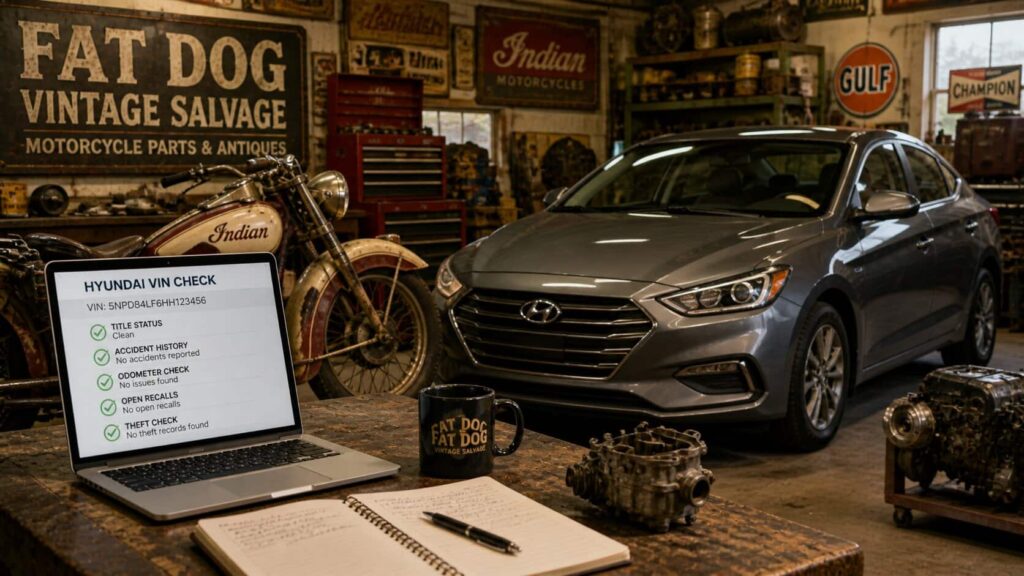
The Restorer’s Daily Driver: Why Used Hyundai Buyers Should Read the VIN Twice
No one makes money restoring old motorcycles by buying a 1948 Indian Chief project. Not when the carburetor kit is back ordered, the chrome shop insists on a deposit before the bumper heads for acid, and the magneto rebuild estimate just crossed the five hundred dollar mark again. Everyone who has pulled a pre-war chassis into the workshop understands the mathematics of the situation: every dollar spent on a tow truck or rebuilding transmission work that might not have happened otherwise means a dollar unavailable for gaskets, ignition components, or newly minted NOS fender replacements. That is where a good used car comes into play, as long as the VIN reads clean before the deposit gets made.
How Cost-Conscious Motorcycle Buyers End Up With Hyundais
The old bike enthusiast community tends to be especially budget-oriented in areas where the rest of the world does not need to cut corners. Machine-shop fees for an old Knucklehead can total upwards of eight thousand dollars; Gold Star magneto repairs push past the one thousand dollar barrier regularly enough to make people swear they will never restore another bike with the same engine ever again. In this context, finding a daily driver that pays its own way is a necessity, which is why late-model used Hyundais become the most likely candidates among all other makes.
In terms of fuel economy and reliable performance, the 2017-2020 Elantra can be expected to operate reliably on oil changes alone. Its counterpart, the Sonata Hybrid, offers quiet operation that can reach an impressive forty miles per gallon for city driving. The 2020 Tucson has room for even bigger loads: for example, a milling machine head would not be a problem here.
On the downside, the price range used Hyundais usually belong to leaves enough margin for the cars in need of some extra work to return to circulation. For instance, the 2.0-liter Theta II engine had its problems with recall, and not everyone complied with that recall properly. Other issues include washed titles, rebranding of branded titles for cross-state sale, and structural repairs hidden behind cosmetic fixes that were supposed to take care of any remaining evidence of trouble. Again, none of this is specifically related to Hyundais, but the ratio price-volume implies that the brand has its share of such vehicles.
Why Checking the VIN Comes First
Like anyone who has experience restoring pre-war bikes, restorers understand the importance of checking provenance before investing in anything. Matching numbers, frame code, paint codes, and engine serials are vital to getting an idea of whether a vintage piece was well-treated or not. The same is true in relation to purchasing a used car: the VIN is what the buyer needs first. This seventeen-digit code includes information about the factory, model year, body type, engine code, and other important parameters that can serve as a basis for comparison between the actual vehicle and the listed one. For the buyer, running a quick Hyundai VIN decoder free will allow detecting obvious inconsistencies in the listing; for additional safety, the buyer may want to pay extra and obtain a full history report for the car.
Some of the critical parameters that need to be checked while looking into the vehicle’s history via its VIN include the following:
- Title brand history (clean, salvage, rebuilt, flood, or lemon law buyback)
- Any history of accidents or airbag deployment events
- Any cases of odometer tampering
- Open recalls (especially concerning the Theta II engine and fire-prone ABS module)
- Previous owners’ identity and use type (personal, fleet, rentals)
If a used vehicle has a clean Carfax but four owners within three years and three states, then something needs explaining. Another case to watch out for is the 60,000-mile Sonata said to be a one-owner garage-kept ride whose VIN history actually shows two appearances at auctions.
What Buying a Bad Car Means for Restoration Budget
Mathematically, it works out like this: a car costing nine thousand dollars that turns out needing a new engine after only four months costs as much as a complete pre-war wheel set. A Tucson flood-titled in year nine that fails the mandatory inspection means a year of seat upholstery repair. The restorer who decides not to check the VIN is actually taking money away from their chrome bucket and putting it in the tow-truck one without realizing it.
Checking the VIN before purchasing a car ensures that bad vehicles will not get picked up and provides additional leverage in negotiations with the seller on the good ones: once it becomes clear that the owner knows the entire history of the car, there is no way around offering a discount on that seven-hundred-dollar price tag. Seven hundred dollars will go far in providing a fresh set of points and condensers and paying for the magneto bench test, leaving enough money left for a long-desired Whitworth socket set.
Discipline Works Both Ways
There is a common thread running through this discussion. The ability to prove that something belonged to an object and has been restored properly is crucial in restoring a classic vehicle. Missing this proof can lead to a significant amount of wasted time and, ultimately, to the loss of value in a completed project. In case of a used car, neglecting to confirm its ownership and history can lead to such issues as unexpected transmission failure during a journey to pick up a newly powder-coated tank. This is still not the same thing, yet the same approach applies here. Check the numbers before spending the money.