
The BSA Gold Star: A Love Story
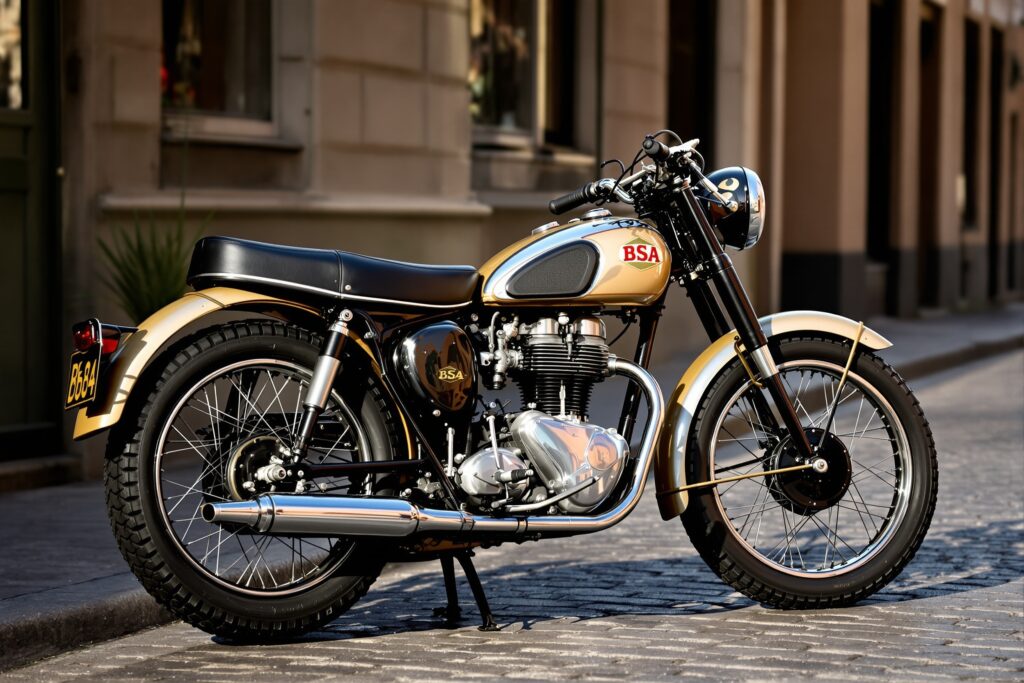
Motorcycles are often viewed as simple machines built for transportation. But for a select group of riders, certain bikes transcend their mechanical components to become something entirely different. The BSA Gold Star is one of those rare machines. It sparked a romance between riders and the open road that has lasted for decades.
Produced by the Birmingham Small Arms Company (BSA), the Gold Star became the definitive British single-cylinder motorcycle. It was fast, beautiful, and demanding. Owning one was never about basic commuting. It required dedication, mechanical sympathy, and a deep appreciation for pure performance. For those who understood its quirks, the Goldie offered a riding experience that modern, computer-controlled motorcycles struggle to replicate.
The Anatomy of a Legend
The engineering behind the BSA Gold Star was a masterclass in purposeful design. At its heart was a massive single-cylinder engine, available in both 350cc and 500cc variations over its production run. The later DBD34 model, featuring a 500cc engine with an alloy cylinder head and a massive Amal GP carburetor, remains the most coveted version today.
BSA engineers focused heavily on weight reduction and power output. They utilized aluminum components and refined the engine internals to handle high RPMs. The frame was robust, designed to keep the bike stable at high speeds while providing excellent feedback to the rider.
Visually, the Gold Star was striking. The chrome-plated fuel tank with silver-painted panels and the distinctive swept-back exhaust pipe gave it an aggressive, forward-leaning stance even when parked. Every nut, bolt, and lever served a specific purpose. This commitment to functional beauty helped solidify its legendary status among enthusiasts who appreciated raw, unadulterated engineering.
Dominating the Track
The name “Gold Star” was born directly from racing triumph. In 1937, legendary racer Wal Handley took a heavily modified BSA Empire Star around the famous Brooklands circuit. He achieved an average lap speed of over 100 miles per hour. For this feat, the British Motorcycle Racing Club awarded him a literal gold star pin. BSA immediately capitalized on this achievement, launching the Gold Star model the very next year.
Racing was baked into the motorcycle’s DNA. Throughout the 1950s, the Gold Star absolutely dominated the Clubmans TT at the Isle of Man. This race was designed for production-based motorcycles, and the Goldie proved so effective that it effectively killed off the competition. Entire grids were filled with BSA Gold Stars.
The bike’s success wasn’t limited to paved circuits. Modified versions found immense success in off-road scrambles and trials competitions. The torquey single-cylinder engine and rugged frame made it incredibly adaptable to dirt, mud, and uneven terrain. This versatility only added to the bike’s mystique, proving it was a true all-around performer.
The Bond Between Rider and Machine
Owning a Gold Star has always been a highly interactive experience. Starting the engine requires a specific ritual. The rider must find top dead center, use the valve lifter, and deliver a firm, committed kick. Get it wrong, and the high-compression engine will violently kick back. Get it right, and the massive single-cylinder springs to life with a deep, authoritative thud.
Riding the Goldie demands constant attention. The clutch can be heavy, and the close-ratio gearbox requires precise timing. But when the road opens up, the motorcycle delivers an unforgettable sensation. The vibration of the engine pulses through the handlebars and footpegs, connecting the rider directly to the combustion process.
Then there is the sound. The Gold Star exhaust note is legendary in the motorcycling world. Under heavy acceleration, it produces a thunderous roar. When the rider rolls off the throttle, the exhaust emits a distinct “twittering” sound, a characteristic that enthusiasts can identify from miles away. This sensory feedback creates a profound emotional bond, turning every ride into a memorable event.
Fueling the Cafe Racer Culture
During the late 1950s and early 1960s, a new youth subculture emerged in the United Kingdom. Young men and women gathered at transport cafes, most notably the Ace Cafe in London, listening to rock and roll and racing their motorcycles on the newly built arterial roads. These riders became known as the Ton-Up Boys, and their goal was simple: hit 100 miles per hour (the “ton”).
The BSA Gold Star was the ultimate weapon of choice for this new breed of street racer. With its low clip-on handlebars, rear-set footpegs, and powerful engine, it looked fast and went even faster.
Riders would drop a coin in the cafe jukebox, sprint to their bikes, and attempt to race to a predetermined point and back before the song ended. The Gold Star’s aggressive styling and high-speed capability perfectly matched the rebellious energy of the era. It helped define the cafe racer aesthetic, a minimalist, performance-focused design language that heavily influences custom motorcycle builders to this day.
The Timeless Allure of the Goldie
Decades after the final original model rolled off the assembly line in 1963, the BSA Gold Star continues to captivate motorcycle enthusiasts. It represents a golden era of British manufacturing, a time when motorcycles were raw, visceral, and unapologetically demanding.
Classic bike collectors fiercely hunt down original DBD34 models, restoring them to museum quality or keeping them running for weekend blasts through the countryside. The love story between the rider and the Gold Star endures because the motorcycle offers something highly sought after in the modern era: pure mechanical engagement. It reminds us that sometimes, the most rewarding journeys require a little effort, a lot of passion, and a machine with a soul.