
Illinois Hauler Truck Buying Guide: Why Plate Checks Matter for Vintage Transport
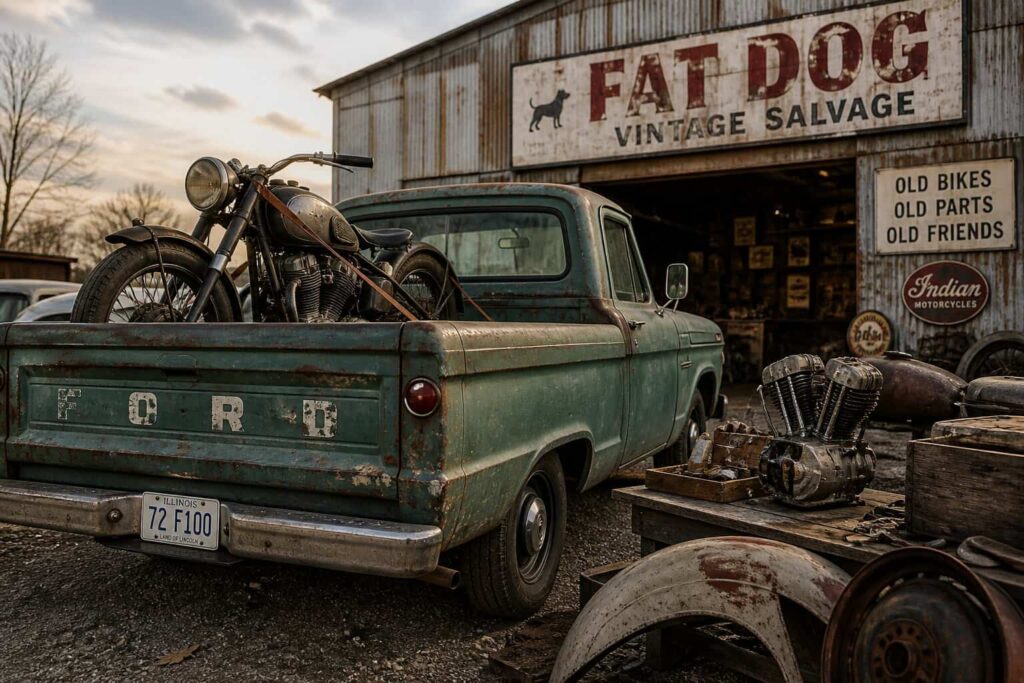
Transporting Vintage Iron in Illinois: The Reason for Checking a License Plate Before a Sale
When people think about vintage bikes in Illinois, their minds go straight to the Chicago chrome meets. There are the Lake County swap meet, held on the Grayslake fairground every month during spring through fall; the monthly Kane County show on the first Sunday of the month in St. Charles; and the traffic flow of trucks going westbound to the Labor Day Davenport Iron Run. Estate sales in Will and DuPage counties throw in some odd items: a non-running 1948 Indian Chief project with a 30-year engine life, the bottom-end components of a Knucklehead engine on a wooden palette, and two parts bins of British carburetors from before the war. The bikes will be photographed and posted in online catalogs, but the trucks and trailers used to transport them get far fewer looks – until one of them turns out to cause trouble. When the plate does not check, there is little to do but call a flatbed.
The Market for Hauler Trucks That Feed Midwest Resto Rallies
Vintage iron haulers are much older than many people expect. Body-on-frame trucks manufactured between 1968 and 1985 are the go-to choice because they provide a chassis that is easy to maintain and service, and room in the bed of the truck for a frame jig and a rolling workbench. It is possible to use a 1979 Chevrolet G20 pickup truck with a small-block 350 engine to transport a Gold Star roller and several parts bins in one haul. Likewise, a 1972 Ford F-100 with the original 360 engine will transport a Knucklehead frame and a tank of acetone to the bike shows and bring back a project. Those trucks circulate and get sold in large volumes in the state.
The trade-off lies in the vehicle title and its history. If the truck was parked in three barns and changed owners in four titles in the past 20 years, the transaction is likely to leave the title examiner scratching their head in confusion. Any salvage brand from the ’90s will disappear if the state changes its title-printing policy and procedures. A state law stops making an odometer disclosure compulsory once the federal 20-year exemption period elapses, which means a 2005 model truck is no longer protected by its odometer reading in 2025. While this happens everywhere, Illinois sees it happen often because the vintage iron market is active there.
Details Uncovered With an Illinois Plate Search
Any purchase of a hauler truck in Illinois involves a Illinois license plate search. Such checks pull up title history across every state the vehicle has been registered in, along with all the reports of accidents and damage and the salvage history. All these results come directly from the state Secretary of State and the federal NMVTIS system, and any salvage brand issued in another state shows up alongside the current Illinois clean title, something many buyers overlook and the plate read highlights. The search is the easiest way to ensure a smooth transaction without having to spend months doing the necessary paperwork.
The details of interest in a plate check for the purpose of purchasing a hauler truck in the state include:
- Title brands issued in other states
- Accident events
- Structural repairs
- Airbag deployment
- Odometer rollbacks and disclosure history
- Recall notices, including ignition switch and brake lines
- Vehicle owner change and registration use history
Two identical trucks may have different histories despite the identical plates and exterior appearance.
Cook County Sales Tax and the Pre-1996 Emissions Exemption
There are several peculiarities associated with buying a vintage truck in Illinois. Cook County applies an extra sales tax rate on top of the standard state amount, which means that trucks that are registered with a Chicago address pay additional sales tax. Buyers at the Lake County swap meet regularly reduce the asking price to cover the extra expense while the buyers outside the metropolitan area often do not see the difference. Likewise, transferring ownership in the Chicago area requires a slightly longer wait due to additional affidavit required in case of a missing odometer disclosure on pre-2011 vehicles.
This is also true for title processing. The downstate agencies process bonded titles faster since there is less demand compared to the Chicago area. On the other hand, Illinois allows vehicles with a model year of 1995 or earlier to pass the vehicle emissions inspection regardless of the county they are in. In other words, any truck manufactured before 1996 automatically qualifies for the exemption, allowing it to pass an emissions check even when no testing facility can find a tailpipe.
The Importance of the Provenance Across Different Assets
The provenance concept is not applicable to antique bikes alone. When buying a rare engine, the frame number has to be verified against the records kept in the factory. Likewise, checking the license plate on a vintage truck should be just as important. Not knowing the history behind a hauler truck can lead to an unexpectedly long wait in the garage after a bike project has been completed.