
Swap Meet Survival Guide What to Bring
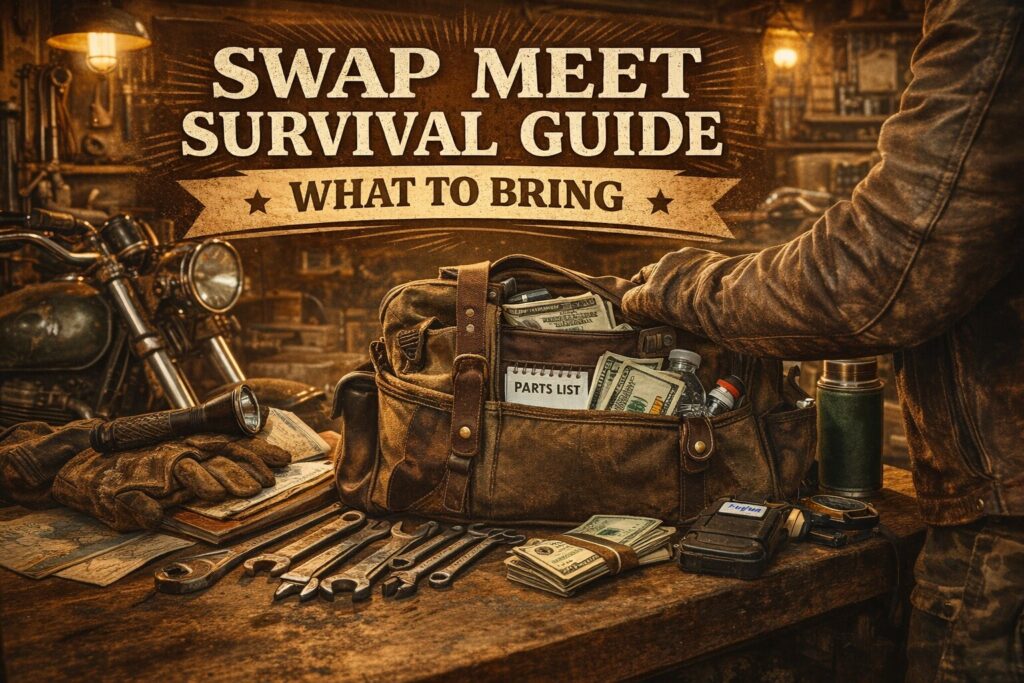
There is something special about a good swap meet. The smell of old oil, rows of parts laid out on tarps, and the quiet excitement of finding that one piece you have been searching for. Whether you are restoring a vintage Harley or just browsing for inspiration, preparation can make the difference between a wasted trip and a successful haul.
Walking into a swap meet unprepared often leads to missed opportunities. Sellers move fast, good parts disappear quickly, and not everything is labeled clearly. If you want to make the most of your time, you need more than just enthusiasm. You need a plan and the right gear.
Know Your Mission Before You Arrive
Before packing anything, take a moment to define what you are actually looking for. Swap meets can be overwhelming, and it is easy to get distracted by interesting but unnecessary items.
Write down:
- Specific parts you need
- Compatible models and years
- Measurements or part numbers
- A rough budget
Having a clear list helps you stay focused. It also makes negotiations easier because you already know what the part is worth to you.
Cash Is Still King
Most swap meet vendors prefer cash. While some may accept digital payments, you should never rely on it. Bring a mix of small and medium bills.
Recommended breakdown:
- Small bills for quick purchases
- Larger bills for negotiations
- Separate stash for emergencies
Keeping your money organized helps avoid fumbling during deals. It also gives you an advantage when negotiating, as showing exact cash can often close a sale faster.
Bring Basic Tools for Inspection
You cannot trust appearances alone. A part may look good on the outside but hide problems underneath. Carrying a small inspection kit is one of the smartest things you can do.
Essential tools:
- Flashlight for checking cracks or wear
- Small magnet for identifying metal types
- Measuring tape or calipers
- Spark plug wrench or basic socket set
These tools allow you to verify parts on the spot instead of guessing. Sellers respect buyers who know what they are doing, and you reduce the risk of buying unusable components.
A Bag or Backpack Makes Life Easier
Carrying parts by hand quickly becomes exhausting. Bring a durable backpack or a canvas bag that can handle weight and sharp edges.
Look for:
- Strong stitching
- Multiple compartments
- Comfortable straps
If you plan to buy larger items, consider leaving space in your vehicle or bringing a small cart. Organization matters when you are moving through crowded aisles.
Dress for the Environment
Swap meets are rarely comfortable environments. They can be dusty, hot, cold, or muddy depending on the season.
Wear:
- Comfortable boots or work shoes
- Durable clothing you do not mind getting dirty
- A jacket or layers for changing weather
Avoid anything too loose or fragile. You will be bending, lifting, and walking for hours.
Bring Reference Material
Even experienced restorers forget details. Having quick access to reference material can save you from costly mistakes.
Options include:
- Printed parts diagrams
- Photos on your phone
- Notes about correct finishes or markings
Being able to compare a part instantly helps you confirm authenticity and avoid reproductions when you are looking for original pieces.
Stay Hydrated and Take Breaks
It may sound simple, but many people underestimate how physically demanding swap meets can be. Walking for hours while carrying parts takes energy.
Bring:
- Water or a reusable bottle
- Snacks for quick energy
- A small break plan
Taking short breaks helps you stay sharp. Fatigue leads to poor decisions, especially when negotiating or inspecting parts.
Be Ready to Negotiate
Negotiation is part of the experience. Vendors expect it, and prices are often flexible.
A few tips:
- Start respectfully, not aggressively
- Point out flaws if you notice them
- Be willing to walk away
Having cash in hand gives you leverage. Sellers are more likely to accept a slightly lower price if they know the deal can be completed immediately.
Timing Matters More Than You Think
Arriving early gives you access to the best selection. The rare parts are often gone within the first few hours.
However, staying late has its own advantage. Vendors may lower prices to avoid packing items back up.
If possible, plan for both:
- Early arrival for rare finds
- Late stay for better deals
Do Not Ignore the Small Stuff
It is easy to focus on big-ticket items like engines or frames. But small parts often make or break a restoration project.
Keep an eye out for:
- Fasteners
- Brackets
- Original hardware
- Small trim pieces
These items are often harder to find later and can save you time during the rebuild process.
Build Relationships With Sellers
Swap meets are not just about parts. They are about people. Many vendors return year after year, and building relationships can give you access to better deals and rare inventory.
Take time to:
- Ask questions
- Show genuine interest
- Exchange contact information
A good connection can lead to future opportunities that you will not find by browsing alone.
Know When to Walk Away
Not every deal is worth it. If something feels off, trust your instincts. There will always be another part, another vendor, and another event.
Avoid:
- Overpaying out of excitement
- Buying parts you do not need
- Ignoring obvious damage
Discipline is just as important as enthusiasm.
Final Thoughts
A successful swap meet trip is not about luck. It is about preparation, awareness, and knowing how to move through the environment efficiently. When you bring the right tools, stay focused, and approach each interaction with confidence, you increase your chances of finding exactly what you need.
The next time you walk into a swap meet, you will not just be another visitor. You will be prepared, efficient, and ready to make the most of every opportunity.