
Triumph Bonneville Carb Tuning: Getting It Right
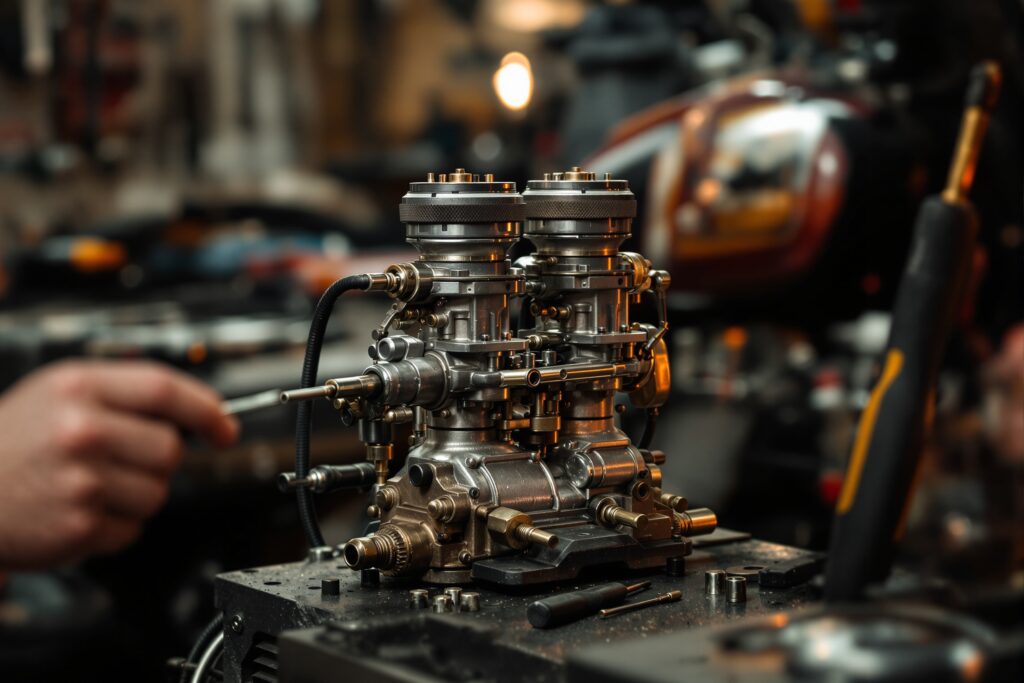
The Triumph Bonneville is a true icon of motorcycling history. Its classic lines, parallel-twin engine, and raw mechanical feel offer a riding experience that modern fuel-injected bikes often struggle to replicate. Keeping that carbureted engine running smoothly requires a bit of mechanical sympathy. When the carburetors fall out of sync or the mixture sits slightly off, you will notice a drop in performance, poor fuel economy, or a sluggish throttle response.
Tuning the carburetors ensures your bike delivers reliable power and a crisp exhaust note. Getting the air and fuel mixture perfectly dialed in might seem intimidating to a beginner. However, with patience and a methodical approach, you can master this essential maintenance task right in your own garage.
This guide walks you through the entire process of tuning your Triumph Bonneville’s carburetors. You will learn the core concepts of the air-fuel mixture, the specific steps to adjust your jets, and how to synchronize a dual-carb setup for optimal performance.
Understanding the Basics of Carb Tuning
A carburetor has one primary job: mixing air and fuel in the precise ratio required for combustion. The ideal ratio for a gasoline engine is generally around 14.7 parts air to 1 part fuel.
If your engine receives too much fuel, it runs “rich.” A rich mixture can cause sluggish acceleration, strong exhaust odors, and black, sooty spark plugs. If the engine receives too much air, it runs “lean.” A lean condition leads to high engine temperatures, popping noises on deceleration, and a loss of power. Carb tuning is the process of adjusting various internal components to ensure the mixture stays balanced across the entire RPM range.
Preparation and Necessary Tools
Before making any adjustments, ensure your motorcycle is in good baseline condition. Tuning a carburetor to compensate for bad spark plugs, old fuel, or clogged air filters will only cause headaches later. Start with fresh fuel, clean filters, and properly gapped spark plugs.
Gather the following tools:
- A set of quality flathead and Phillips screwdrivers
- A vacuum gauge or manometer (carburetor synchronizer tool)
- A small fan to keep the engine cool while idling in the garage
- Replacement jets and needles (if you plan to re-jet)
- A clean rag and protective gloves
Step-by-Step Guide to Tuning
Different parts of the carburetor control fuel delivery at different throttle positions. You must tune these circuits in a specific order to achieve a smooth power band.
Idle and Pilot Circuit
The pilot circuit controls the fuel mixture from idle up to about 1/4 throttle. Start the engine and let it reach normal operating temperature. Locate the idle mixture screws on the bottom or side of the carburetors. Turn the screws in (clockwise) until they lightly seat, then back them out to the factory recommended setting—usually around 1.5 to 2.5 turns. Adjust the screws slowly in quarter-turn increments until you find the point where the engine idles at its highest, smoothest RPM. Finally, use the main idle adjustment knob to set the idle speed to the factory specification (typically around 1,000 RPM).
The Needle and Mid-Range
The jet needle and needle jet control the mixture from 1/4 to 3/4 throttle. If your bike stumbles or hesitates when you roll on the throttle in traffic, you likely need a needle adjustment. Raising the needle allows more fuel to flow, enriching the mixture. Lowering the needle restricts fuel, leaning the mixture. You can adjust this by moving the small clip on the top of the needle to a different groove.
The Main Jet
The main jet takes over from 3/4 to wide-open throttle. Tuning the main jet requires test riding. If the bike pulls hard all the way to the redline, your main jet is correct. If it bogs down or feels like it runs out of breath at high speeds, you may need a larger (richer) or smaller (leaner) main jet. Swapping the main jet requires removing the float bowl at the bottom of the carburetor.
Common Issues and Troubleshooting
Even with careful adjustments, you might encounter a few hiccups.
- Exhaust popping on deceleration: This almost always indicates a lean pilot circuit. Try backing the idle mixture screw out another half turn.
- Hanging idle: If the RPMs stay high when you close the throttle before slowly dropping back to idle, you have a lean condition or an air leak around the carburetor intake boots.
- Fouled spark plugs: If you pull your spark plugs and the tips are coated in dry, black soot, your main jet or needle setting is too rich.
Synchronizing Dual Carburetors
The Triumph Bonneville features twin carburetors. For the engine to run smoothly, both carburetors must open exactly at the same time and draw the exact same amount of vacuum. This is known as synchronizing or balancing the carbs.
Attach your vacuum gauge hoses to the vacuum ports on the intake manifolds. Start the bike and let it idle. Look at the dials or fluid levels on your gauge. If they do not match, locate the balance adjustment screw located on the throttle linkage between the two carburetors. Turn the screw very slightly until the vacuum readings are identical on both sides. Blip the throttle a few times to ensure the linkage settles, and verify the readings match again.
Final Testing and Road Trials
The true test of your carburetor tuning happens on the road. Take the motorcycle out for a ride in a safe area where you can test different throttle positions. Pay close attention to how the bike responds off the line, how it accelerates through the mid-range, and how it performs at wide-open throttle.
For absolute confirmation, perform a “plug chop.” Ride the bike at a specific throttle position (e.g., wide open) for a short distance, hit the kill switch, pull in the clutch, and coast to a stop. Remove the spark plugs and inspect the ceramic insulator. A light tan or biscuit color means your mixture is perfect. White indicates lean, and dark black indicates rich.
Hit the Road with Confidence
Mastering the carburetors on a Triumph Bonneville requires a bit of trial and error, but the reward is a motorcycle that responds perfectly to every twist of your wrist. By taking the time to understand the pilot, needle, and main jet circuits, you eliminate the guesswork and ensure your classic parallel-twin runs exactly as the engineers intended. Keep your tools handy, monitor your spark plugs, and enjoy the smooth, reliable power of a properly tuned machine on your next ride.